One current map of every office, plant, and data center.
Run a lightweight daemon at each site. Each one scans its own network on a schedule, and every site lands in the same Scanopy server, with one inventory and one search across all of them.
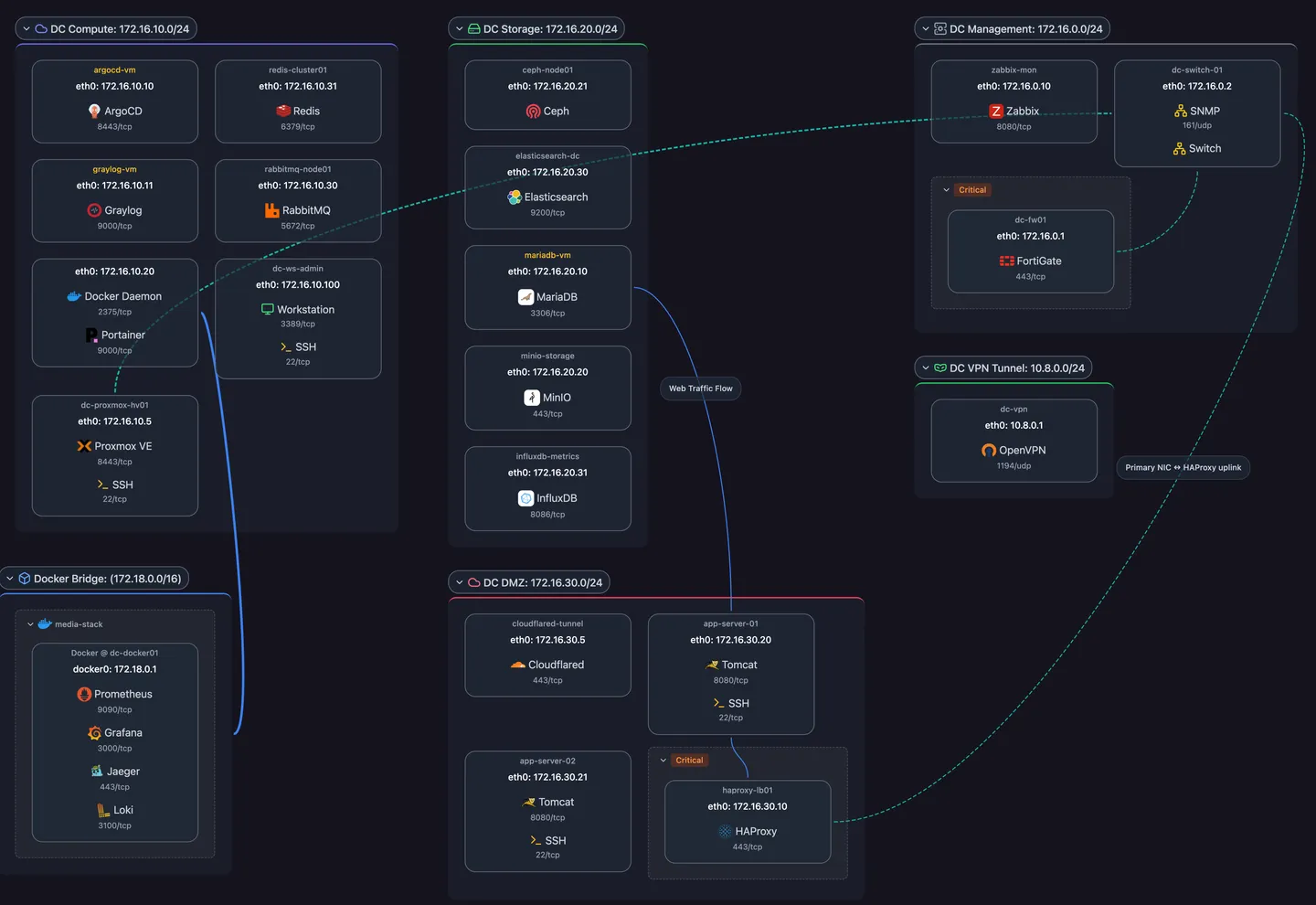
Each site scans itself
One daemon per site
Run the daemon on a Linux, macOS, or Windows machine at the site, or in Docker on Linux. No agents on endpoints.
Scan what you choose
Point a scan at specific subnets, or let it cover every subnet at the site.
Its own schedule
Each site rescans on its own schedule, so a busy plant and a quiet branch office both stay current.
Everyone sees the sites they need
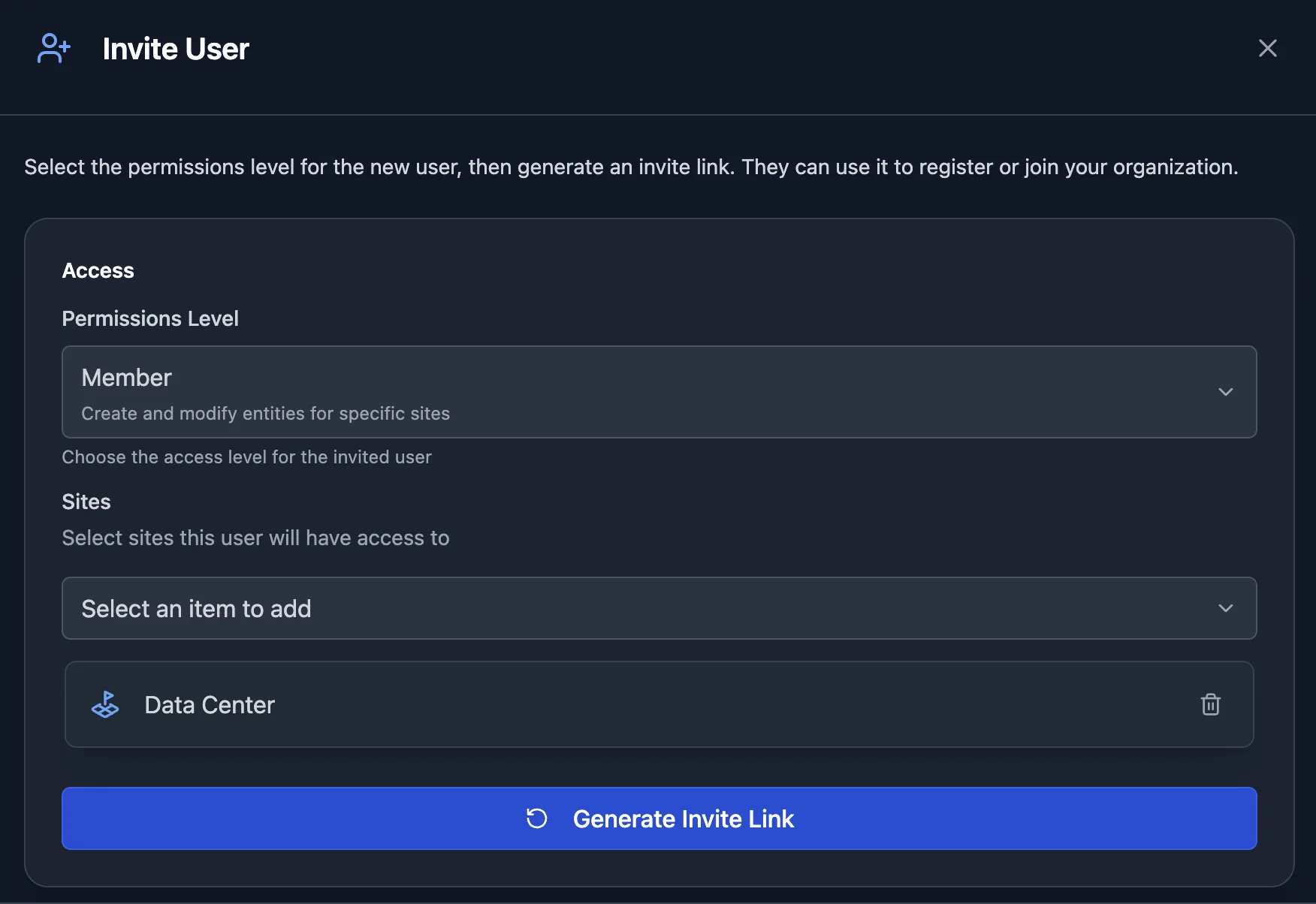
Site-level access
Give a site’s IT lead access to that site only, as an admin, member, or viewer.
Digests go to the right people
The digest after each scan goes to the people with access to that site, not to everyone.
Read-only links for auditors
Share a live, read-only map with an auditor or a parent company without creating an account.
Every site in one inventory
Filter by site
Hosts, subnets, and VLANs carry their site, so the inventory filters to one site or shows them all.
One search
Search for a host, IP, or service across every site you have access to.
Export per site
Export a filtered inventory to CSV for one site’s audit, or the whole estate for the annual review.

IT department
Municipality - Sweden
"With over 800 switches in our network, keeping topology documentation up to date by hand is almost impossible. We needed automation, especially with NIS2 raising the documentation requirements. Scanopy keeps it current for us."
The features behind it
Frequently asked questions
Does each site need its own Scanopy server?
No. Each site runs a daemon, and every daemon reports to one Scanopy server, self-hosted or in Scanopy Cloud.
How many sites can I document?
It depends on the plan. The pricing page lists the sites included in each.